

Tackling the insurance protection gap : leveraging climate mitigation and nature to increase resilience
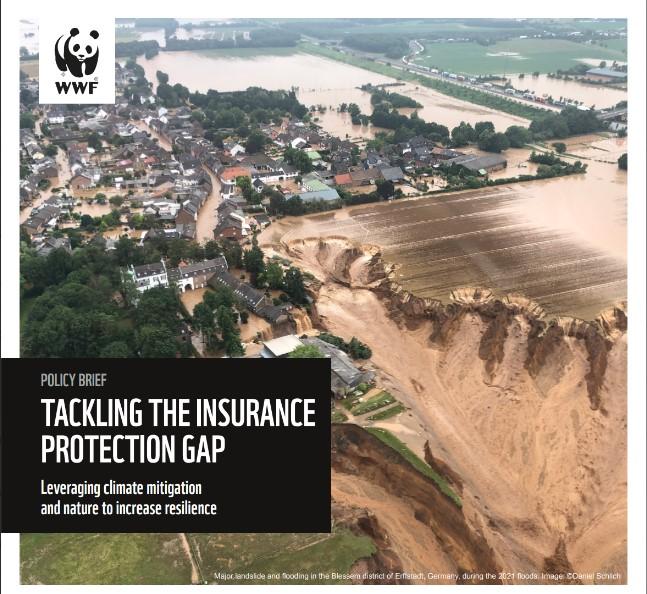
Contenido multimedia no disponible por derechos de autor o por acceso restringido. Contacte con la institución para más información.
| Tag | 1 | 2 | Value |
|---|---|---|---|
| LDR | 00000cam a22000004 4500 | ||
| 001 | MAP20250019393 | ||
| 003 | MAP | ||
| 005 | 20251119134813.0 | ||
| 008 | 251119s2025 che|||| ||| ||eng d | ||
| 040 | $aMAP$bspa$dMAP | ||
| 084 | $a328.1 | ||
| 110 | 2 | $0MAPA20090041271$aWorld Wide Fund For Nature | |
| 245 | 1 | 0 | $aTackling the insurance protection gap$b: leveraging climate mitigation and nature to increase resilience$cWWF |
| 260 | $aZurich$bWorld Wide Fund For Nature$c2025 | ||
| 300 | $a14 p | ||
| 490 | 0 | $aPolicy brief | |
| 505 | 0 | $aPolicy brief tackling the insurance protection gap -- Extreme weather events affect insurance protection and have economic and social ripple effects -- Wwf recommendations: how to close the protection gap and benefit people, nature, business and government -- Undertake a holistic and forward-looking risk and resilience assessment, including direct and indirect losses - while not delaying no-regrets actions -- Reduce ghg emissions and halt and reverse nature loss domestically and through international cooperation to contain mutually reinforcing climate and nature risks -- Make nature and nature-based solutions a centrepiece in adaptation and resilience planning and in response and recovery efforts -- Healthy ecosystems strengthen resilience | |
| 520 | $aThe document highlights how climate change and ecosystem degradation are driving rising losses from extreme weather events, widening insurance protection gaps, and threatening economic and financial stability. It explains that insurers are withdrawing from high-risk areas, premiums are soaring, and governments are increasingly forced to act as insurers of last resort, straining public budgets and sovereign debt. The document stresses that without systemic action, risks will become uninsurable, undermining prosperity and social cohesion. WWF recommends a strategic framework built on four pillars: holistic risk and resilience assessments, reducing greenhouse gas emissions and reversing nature loss, making nature-based solutions central to adaptation, resilience and recovery, and enhancing policy incentives and insurance regulation to align risk transfer with resilience. By integrating nature into planning, valuing ecosystem services, and mobilizing private capital for green solutions, governments can close the protection gap, safeguard communities, and maintain financial stability | ||
| 650 | 4 | $0MAPA20080629755$aSeguro de riesgos extraordinarios | |
| 650 | 4 | $0MAPA20190012508$aBrecha de protección | |
| 650 | 4 | $0MAPA20210003813$aMitigación de riesgos | |
| 650 | 4 | $0MAPA20100016923$aRiesgo sistémico | |
| 650 | 4 | $0MAPA20130005317$aPérdidas máximas por siniestros | |
| 650 | 4 | $0MAPA20080584856$aEfecto invernadero | |
| 650 | 4 | $0MAPA20110021238$aEstabilidad financiera | |
| 650 | 4 | $0MAPA20090037380$aInversiones socialmente responsables | |
| 650 | 4 | $0MAPA20080615277$aRiesgos de la naturaleza | |
| 650 | 4 | $0MAPA20140016556$aResiliencia | |
| 650 | 4 | $0MAPA20080600204$aCatástrofes naturales | |
| 710 | 2 | $0MAPA20090041271$aWorld Wide Fund For Nature | |
| 856 | $uhttps://wwfint.awsassets.panda.org/downloads/wwf--insurance-protection-gap-policy-brief_1.pdf |